At NDTV World Summit, PM Modi warns trade and tech are being weaponised, seeks reform of global institutions
Modi called for a stronger Global South voice in multilateral bodies and said India is moving from a 'back office' to a 'brain office' of the world.
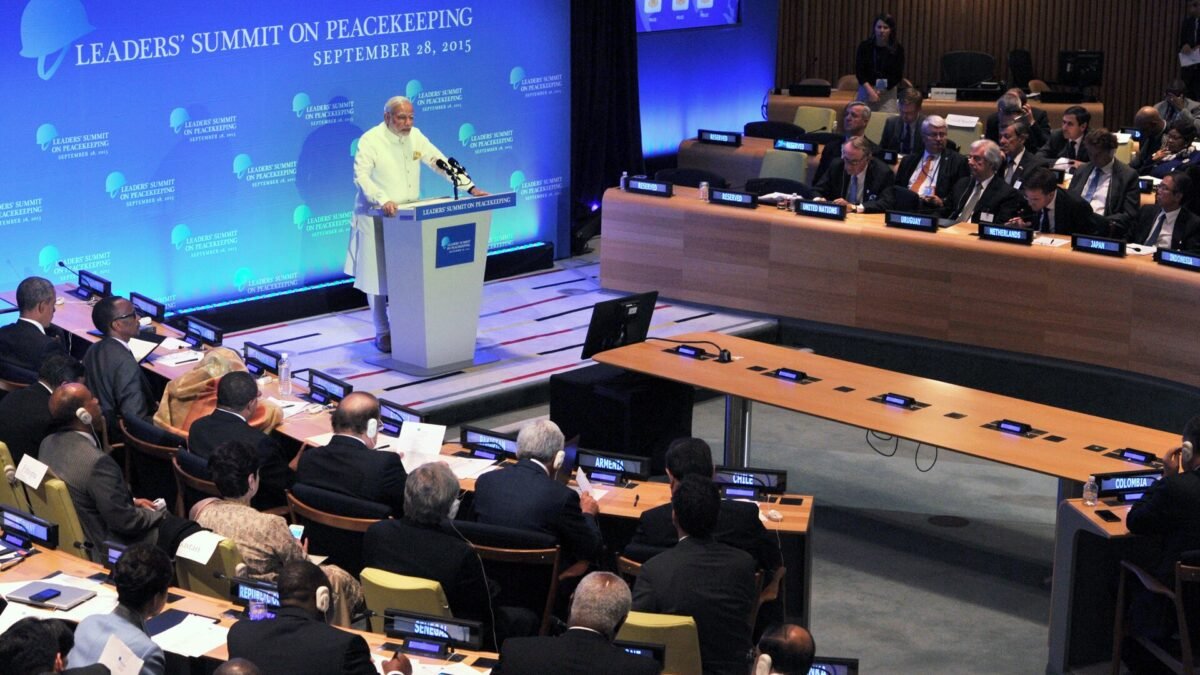
Prime Minister Narendra Modi on Thursday, 22 October, said trade, technology and sea routes that once connected the world have turned into arenas of pressure and tension, and called for an overhaul of global institutions that have failed to keep pace with a changing world. Addressing the NDTV World Summit 2026 in New Delhi, held under the theme “A World Between Orders”, Modi also pitched India as a stabilising force and said the country is shifting from being the world’s back office to its “brain office”.
A world between orders
Modi said global shifts are no longer distant events but now affect ordinary citizens directly. He noted that the United Nations was built on the idea of dialogue rather than raw power, but argued that global institutions have not adapted to the rise of new economies and nations.
He called for multilateral institutions that are more inclusive, give the Global South a greater say, and ensure that cooperation does not break down during crises. Invoking Chanakya’s Arthashastra, he referred to Matsya Nyaya, the “big fish eats small fish” order, and said the world needs a system that guards against such dominance by the powerful.
Recalling the Covid-19 pandemic, the Prime Minister said he had raised the need for institutional change at the G20 and the UN General Assembly in 2020, and pointed out that India supplied vaccines and medicines to more than 100 countries. He also cited India’s G20 and BRICS presidencies, which produced consensus Delhi Declarations, as examples of its role as a bridge-builder.
From ‘back office’ to ‘brain office’
A central theme of the address was India’s move from talent-based services to original research, design and innovation, a shift from “talent at scale” to “thinking at scale”, according to the official summary. Claims made in the speech included:
- India ranks third globally in research publications and saw nearly 1.5 lakh patent filings in 2025.
- About 20 per cent of the world’s chip-design workforce is in India, and students have prepared over 325 chip designs.
- India hosts more than half of the world’s Global Capability Centres.
- Non-fossil electricity capacity has crossed 300 GW for the first time.
- Goods exports rose about 25 per cent in September.
Domestic reform pitch
Modi framed his government’s approach around “Reform, Perform and Transform”, citing zero income tax on earnings up to Rs 12 lakh, over 3.5 crore “Lakhpati Didis” against a target of 6 crore, and 70 lakh new jobs under the PM Viksit Bharat Rozgar Yojana. He also highlighted the restart of Penicillin G production in Kakinada under the PLI scheme, and said API-linked PLI projects have drawn over Rs 5,000 crore in investment.
He linked a self-reliant, developed India by 2047 to wider global stability, resilient supply chains and productivity, closing on a note of “We Will Do It”.
Why it matters
Modi’s remarks, built around the summit’s theme of a world between orders, signal that New Delhi will keep pressing for UN and institutional reform while presenting India’s technology and manufacturing push as part of the answer to a fragmenting world order.
Sources
Related
Maharashtra MLC polls today: graduates, teachers vote for five Council seats; Mahayuti claims clean sweep
Former Bisauli MLA Kushagra Sagar quits BJP after 11 years, likely to join Samajwadi Party