Anthropic Mathematician Says He Proved the Riemann Hypothesis With Claude; Claim Yet to Be Verified
Levent Alpöge says he and Anthropic’s Claude AI found a proof of the 1859 conjecture on prime numbers. He says confirming it will take time.

Levent Alpöge, a mathematician who works at the AI company Anthropic, says he has found a proof of the Riemann Hypothesis — the 167-year-old problem about how prime numbers are distributed — with the help of the company’s Claude AI model. The claim has not yet been independently confirmed.
In a paper released this week on his personal website, Alpöge wrote: “I believe I have, working with Claude, discovered a proof of the Riemann Hypothesis.” He also said he believes the same method could be extended without much difficulty to the Generalized and Extended Riemann Hypotheses.
A famous open problem
The hypothesis was put forward by the German mathematician Bernhard Riemann in 1859. According to the Clay Mathematics Institute, which lists it among its prize problems, it has been checked for the first ten trillion solutions — but a check, however long, is not a proof.
Alpöge has himself urged caution. He said that confirming whether the work, and Claude’s part in it, actually holds up “will take some time,” and described the argument as drawing on far more mathematics than he had expected as a student. The paper does not set out in detail how Claude was used.
The announcement came in the same week that Anthropic made its debut on the Nasdaq.
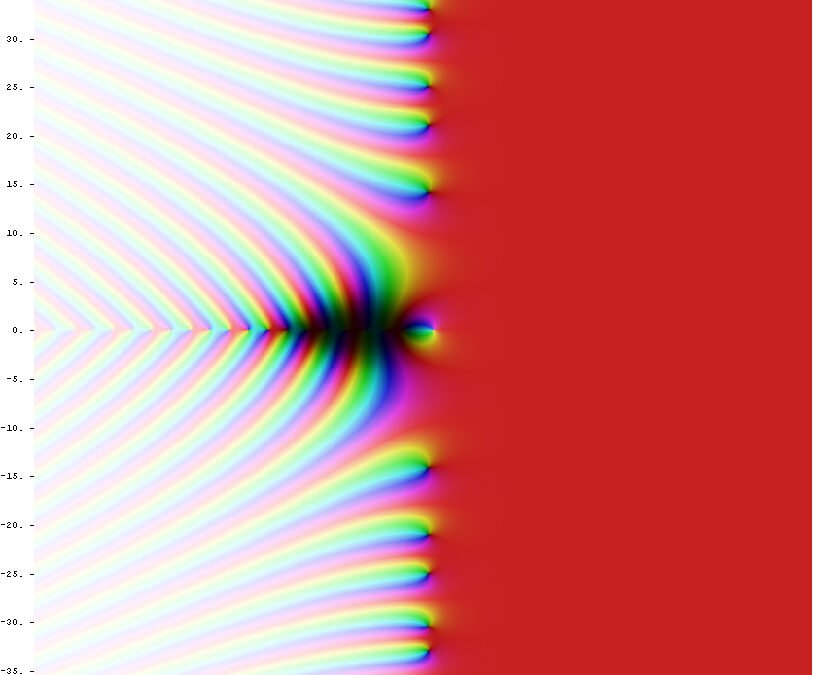
Featured image: Photo: Complex zeta by Jan Homann, Public domain, via Wikimedia Commons.
Sources
Related

GTA 6 Makes $3.79 Billion on Day One, Take-Two Says; 32.5 Million Units Sold Before Release

Samsung One UI 9.5 Beta Opens in India for Galaxy S26: App Lock, Pro Camera Presets and More