INDIA Bloc Resolves to Oppose Delimitation Amendment Bill Together; Wants Lok Sabha Kept at 543 and Women’s Quota Brought In Now
Opposition floor leaders met at Mallikarjun Kharge's home for two hours on Saturday, two days before the Constitution (132nd Amendment) Bill is due in the Lok Sabha. The DMK, AAP and BJD stayed away.
Floor leaders of the INDIA bloc have agreed to fight the Centre’s fresh delimitation push as one, after a two-hour meeting at Leader of Opposition in the Rajya Sabha Mallikarjun Kharge’s residence in New Delhi on Saturday, November 28.
The meeting came two days before the Constitution (132nd Amendment) Bill, 2026, is set to be introduced in the Lok Sabha on Monday, November 30, at the start of a short special sitting of Parliament.
What the opposition wants
The bloc settled on three demands: the Lok Sabha should stay at 543 seats, the one-third quota for women should be put in place within that existing strength, and the present state-wise share of seats should be left untouched for 25 years.
Kharge argued that Scheduled Castes and Scheduled Tribes would not gain seats in line with their population growth under the bill, and accused the BJP and the RSS of using it to hold on to power permanently. He said the Prime Minister had asked for 400 seats at the last election and was now aiming for 800 through this measure, and credited opposition unity for defeating the earlier attempt.
Independent Rajya Sabha MP Kapil Sibal questioned whether an 850-member House could work properly, said women’s reservation could begin immediately within the current 543 seats, and alleged that appointments to a future delimitation body could be used to redraw constituencies in Uttar Pradesh, Haryana and Maharashtra in the government’s favour.
Who came, who stayed away
Those present included Rahul Gandhi, Abhishek Banerjee of the TMC, Kapil Sibal, Abhay Kumar Singh and Manoj Jha of the RJD, P Sandosh Kumar of the CPI, E T Mohammed Basheer of the IUML and N K Premchandran of the RSP, along with Congress general secretaries Jairam Ramesh, Priyanka Gandhi Vadra and K C Venugopal. The DMK, AAP and BJD were invited but did not turn up.
The DMK, which has 22 MPs, has passed a resolution backing the Centre’s delimitation bills, with A Raja saying Tamil Nadu would not lose out. The NCP (Sharadchandra Pawar), with eight MPs, has said it will support the bill if every state gets a uniform 50% rise in seats.
What the bill does
The amendment would give women, including SC and ST women, one-third of the seats in Parliament and in state and UT assemblies through delimitation. Every state’s and UT’s share of Lok Sabha seats, and the strength of their assemblies, would rise by 50%. The maximum size of the Lok Sabha would go up to 850 (up to 815 from states and 35 from UTs), the cap on a state assembly would rise from 500 to 650, and the new allocations and boundaries would be frozen until 2051.
An earlier version of the bill was defeated on April 17, 54 votes short of the two-thirds majority it needed, with 298 members in favour and 230 against. With 538 non-Speaker members able to vote if Kalyan Banerjee’s suspension stands, the bill would need 359 votes if all of them are present.
The Lok Sabha sits from November 30 and the Rajya Sabha from December 2, with both due to rise on December 3, subject to government business.
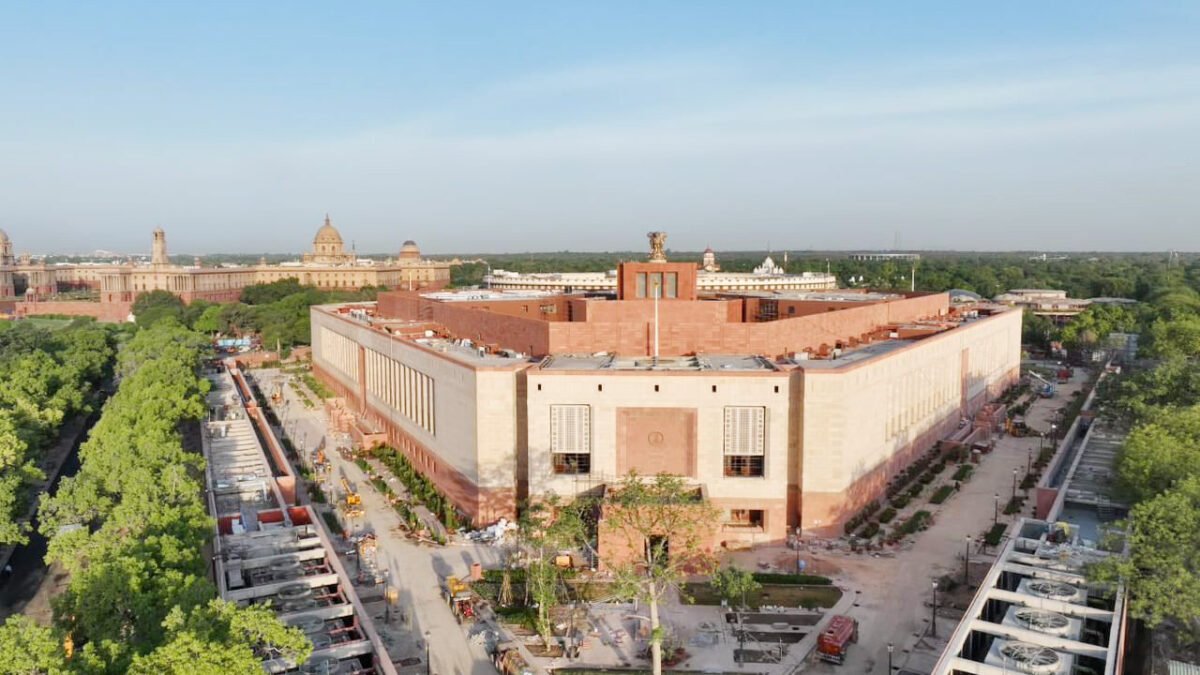
Featured image: Photo: Glimpses of the new Parliament Building, in New Delhi (2) by Ministry of Parliamentary Affairs, GODL-India, via Wikimedia Commons.

Sources
Related
Kerala Pooja Bumper 2026 Result: Rs 12 Crore First Prize Goes to Ticket JC 234427, Sold in Palakkad
IBPS RRB Clerk Prelims Admit Card 2026 Out at ibps.in: Exam on December 6, 12 and 13 for 8,222 Office Assistant Posts