Orionid meteor shower peaks tonight: best viewing in India is after 2.30 am
The Halley's Comet shower peaks on the night of 21-22 October. A bright Moon means the darkest skies in India come after moonset, before dawn.
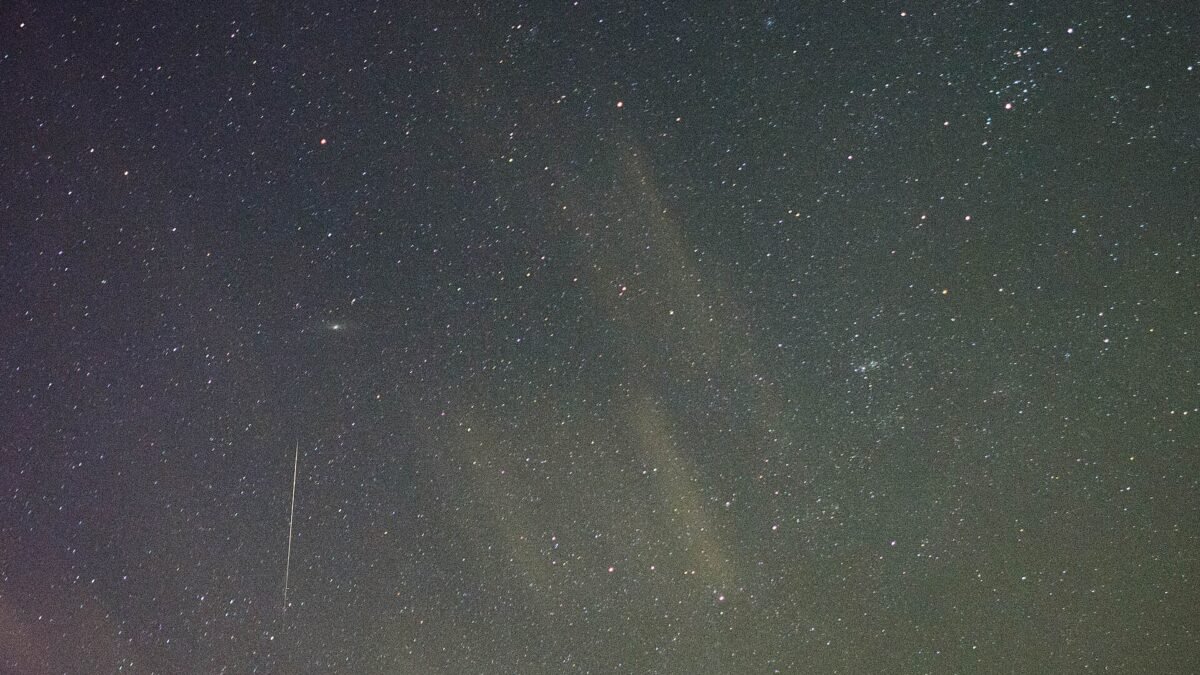
The Orionid meteor shower, made of dust shed by Halley’s Comet, reaches its peak on the night of Wednesday, 21 October, running into the early hours of Thursday, 22 October. Skywatchers in India will have their best chance in the pre-dawn hours, after a bright, waxing Moon has set.
The American Meteor Society (AMS) lists 21-22 October as the shower’s peak night this year. The Orionids are active over a much longer window, from 2 October to 7 November, so a cloudy Wednesday night does not rule out sightings on the nights that follow.
What to expect
The Orionids are a shower of medium strength. The AMS says a typical year brings 10 to 20 meteors an hour at the maximum, though these are counts for a dark, clear sky with the radiant high overhead. Between 2006 and 2009 the display was far richer, at 50 to 75 an hour, but recent years have been modest.
What the shower lacks in numbers it partly makes up for in speed and brightness. NASA says Orionid meteors strike the atmosphere at about 66 km per second. Such fast meteors can leave glowing trails that linger for a few seconds and sometimes flare into fireballs.
The particles are debris from comet 1P/Halley, which takes about 76 years to go around the Sun. It was last seen by casual observers in 1986 and will not return to the inner solar system until 2061, according to NASA. The same stream of dust produces the Eta Aquariid shower in May.
The Moon will get in the way
This year the Moon is the main obstacle. The AMS says it will be a waxing gibbous, about three-quarters lit, on the peak night, and warns of significant interference while it is above the horizon. Only brighter meteors are likely to show through its glare. Full Moon falls on Monday, 26 October.
The practical answer is to wait for moonset. In New Delhi, the Moon sets at about 2:22 am IST on Thursday, 22 October, and astronomical twilight begins around 5:07 am, according to timeanddate.com. That leaves a dark window of roughly two and a half hours. In Mumbai, the Moon sets later, at about 2:48 am, and twilight starts around 5:21 am.
Moonset times vary from city to city, so viewers elsewhere should check local timings rather than rely on a single figure for the whole country. Business Today made the same point in a guide for Indian families published last week.
How and where to look
The meteors appear to come from a point, called the radiant, near the constellation Orion. NASA says the shower is best seen in the hours after midnight, and it continues until dawn. They can, however, streak across any part of the sky, so it is better to take in a wide view than to stare at Orion alone.
NASA advises observers in the northern hemisphere, which includes all of India, to lie back with their feet pointing towards the south-east and look up. It also recommends getting as far as possible from city and street lights and allowing about 30 minutes for the eyes to adjust to the dark. A blanket or reclining chair makes the wait easier.
No telescope or binoculars are needed. Their narrow field of view makes them unsuitable for meteor watching, as Business Today noted.
Clouds can spoil the view as easily as moonlight, so it is worth checking the local forecast before setting out. Those who miss the peak can try again over the next several nights, although the Moon will be brighter and set later each night.
Sources: American Meteor Society, NASA Science, timeanddate.com, Business Today
Related

Dussehra 2026: Vijay muhurat, Dashami tithi and Ravan Dahan timings
Maha Navami 2026: date, Navami tithi timings and Sandhi Puja muhurat