NOAA issues G3 geomagnetic storm warning as second solar eruption reaches Earth
NOAA's SWPC warned of a strong G3 geomagnetic storm on 10 October after CMEs from sunspot AR4549; the first fell short of forecasts.
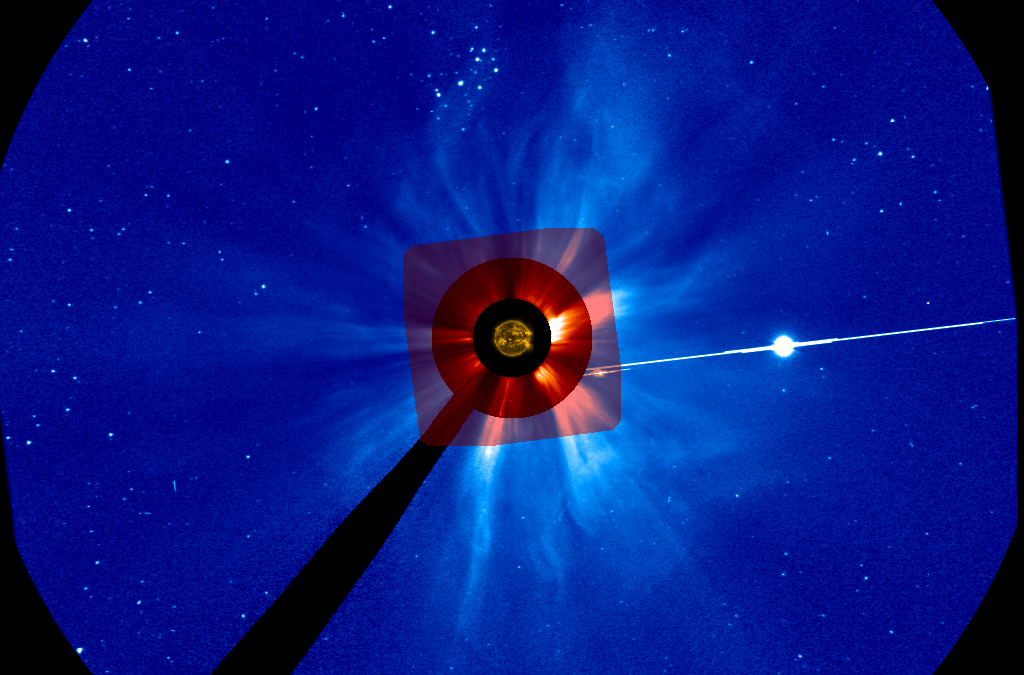
The US National Oceanic and Atmospheric Administration’s Space Weather Prediction Center (SWPC) has raised its geomagnetic storm outlook several times since 6 October, after a series of eruptions from sunspot region AR4549. The first storm to arrive fell short of the forecast, while a later warning pointed to stronger conditions on 10 October.
What NOAA forecast
SWPC issued a G2 (moderate) geomagnetic storm watch on 6 October after a coronal mass ejection (CME) left the Sun alongside an M1.4-class flare, Space.com reported. The agency expected G1 to G2 conditions on 9 October, and a peak planetary Kp index of 6, the level that corresponds to G2.
A second eruption followed. An M6.7 flare from the same region peaked at 15:48 UTC on 8 October and produced a partial halo CME, according to EarthSky. SWPC’s alerts page later listed a G2 watch for 11 October covering two CMEs that left the Sun on 7 and 8 October.
What happened
- 9 October: The 6 October CME arrived as a glancing blow and peaked at Kp 4 around 11 UTC, below the forecast G1 to G2 levels (EarthSky).
- 10 October: SWPC’s page showed a G2 alert after a CME signature was first seen at 14:34 UTC, with a 56 nT sudden impulse recorded at Niemegk, Germany.
- 10 October, 18:00 UTC: SWPC issued a G3 (strong) or greater warning valid until 23:59 UTC, citing strongly enhanced solar wind after the 8 October CME arrived (about 11:30 pm IST).
- 11 October: G2 storms were listed as likely.
The peak Kp value actually reached on 10 October had not been confirmed in the sources reviewed. EarthSky, whose page was last modified on 10 October at 12:59 UTC, before those alerts, reported no aurora sightings for 8 to 11 October. Space.com and Sky at Night Magazine carried forecasts only.
Can it be seen from India?
None of the sources reviewed gave an India-specific forecast. NewsX said the best chances of aurora were in high-latitude regions such as Alaska and northern Canada, with displays reaching farther south depending on intensity. Sky at Night Magazine listed northern US states, Canada and the northern UK as likely viewing areas. Space.com said aurora could extend as far south as Idaho and New York at G2 levels.
Possible effects
SWPC’s G2 guidance, as relayed by The Watchers, lists voltage alarms in high-latitude power systems, satellite orientation corrections, changes in atmospheric drag that affect orbit predictions, and fading of high-frequency radio at higher latitudes. NewsX said widespread disruption was not necessarily expected.
The 8 October flare also caused an R2 (moderate) radio blackout, EarthSky reported. The sources reviewed did not report confirmed damage to satellites, GPS or power grids.
Sources: NOAA SWPC, Space.com, EarthSky, The Watchers, Sky at Night Magazine, NewsX.
Related
Motorola Signature 27 India launch confirmed at IMC 2026: Snapdragon 8 Elite Extreme Gen 6, 200MP periscope camera

2026 Toyota Fortuner Leader Edition launched at ₹36.51 lakh: prices, features and what’s new