

Senior Citizen Can’t Be Forced to Share His Own House With Children: Delhi High Court Orders Son to Vacate
Justice Amit Mahajan set aside orders rejecting an 85-year-old’s plea and told his son and daughter-in-law to leave his self-acquired house within four weeks.
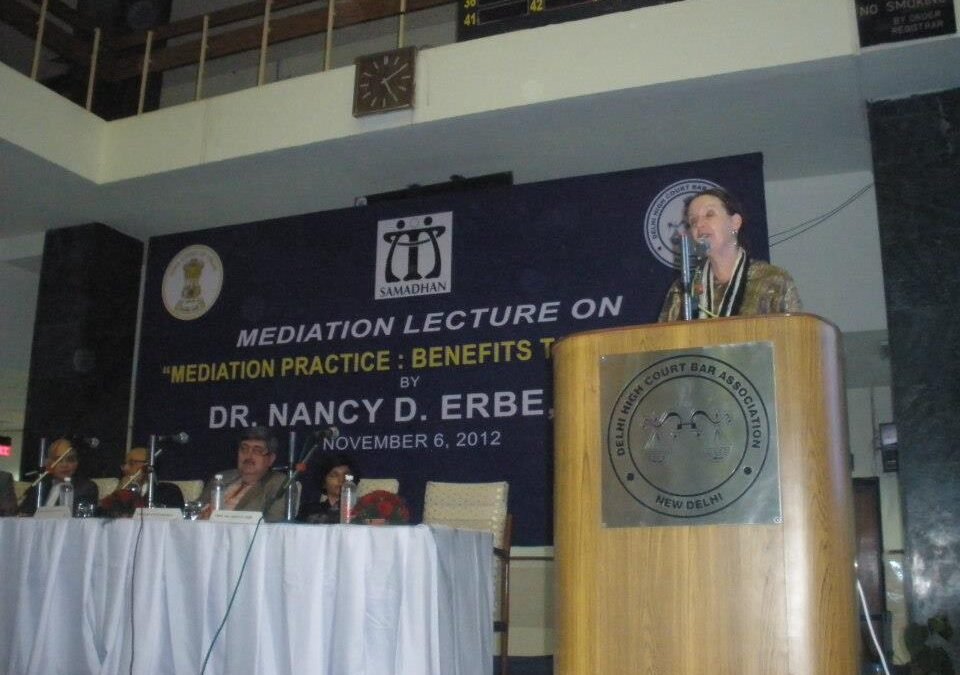

The Delhi High Court has ruled that an elderly parent cannot be made to share his own house with his children against his wishes, and has ordered an 85-year-old man’s eldest son and daughter-in-law to move out of his home within four weeks, LiveLaw reported on 22 November.
Justice Amit Mahajan was hearing a petition filed by Subhash Chander Malhotra against Raman Malhotra and others. The petitioner said the property was self-acquired: he was allotted it by the DDA in 1980 and had it converted to freehold in 2000. His son and daughter-in-law had lived there since their marriage in 2003.
He alleged harassment and threats, said they had stopped supporting him, and claimed the situation worsened after his wife’s death in November 2020. He had filed police complaints since 2022. He sought their eviction and maintenance under the Maintenance and Welfare of Parents and Senior Citizens Act, 2007.
The District Magistrate dismissed his plea, finding the harassment not proved and treating the matter as a property quarrel between his sons. The Divisional Commissioner agreed. The respondents told the court it was a business dispute between brothers and that they had offered ₹15,000 as maintenance.
Setting aside both orders, the High Court relied on the Supreme Court’s ruling in Ravi Kant Gupta v. State of Uttar Pradesh and its own decision in Pritam Singh v. Government of NCT of Delhi. It held that a senior citizen seeking eviction need not prove ill-treatment; it is enough to show that his property needs protection so that he can live in it peacefully and with dignity.
The court said neither the Act nor the Delhi Rules of 2009 demands clear and cogent proof of harassment, noting that abuse inside a home is often hard to prove and that these are summary proceedings. It faulted the authorities for ignoring the police complaints and an earlier High Court direction to the police, and found the enquiry reports unreasoned. A business dispute between the sons, it added, did not make the father’s complaint any less genuine.
The local Station House Officer has been directed to help the petitioner, if needed, to make sure the order is carried out.
— Legal Desk
Featured image: Photo: Delhi HC.jpg by Surance, CC BY-SA 4.0, via Wikimedia Commons.
Sources
Related

Thiruparankundram: Supreme Court Stays HC Findings, Allows Karthigai Lamp at Deepathoon on Nov 24 as One-Time Measure
Shiv Sena Case: Supreme Court Asks Thackeray Side to Explain Dissent vs Defection
