Supreme Court cancels spy-case bail, says lapse in giving written arrest grounds is no automatic ticket to bail
In State of Rajasthan v. Jhabra Ram, the Supreme Court held a defect in conveying arrest grounds does not by itself justify bail unless the accused shows prejudice.
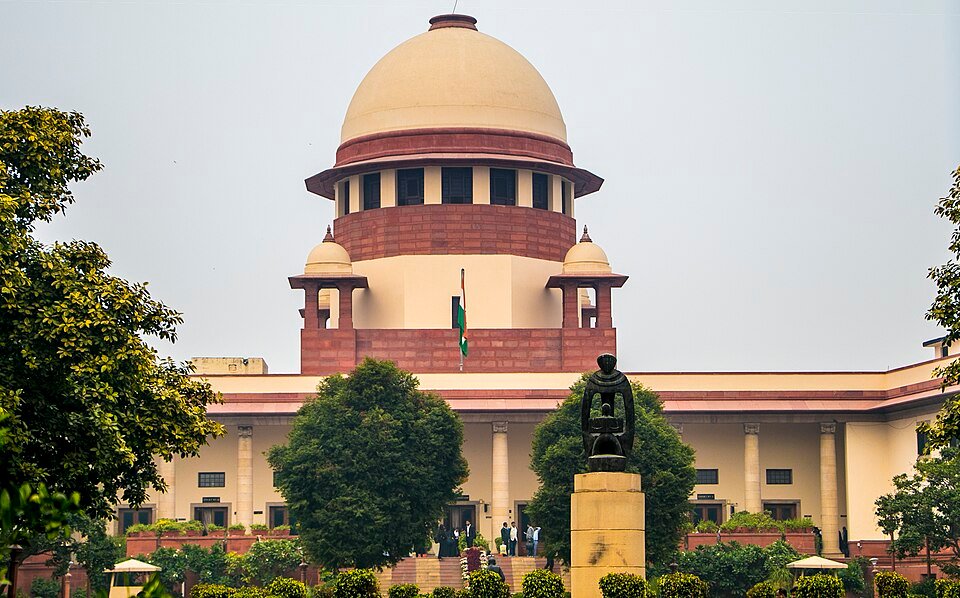
The Supreme Court has ruled that a flaw in the way police tell an arrested person why he is being held does not, on its own, entitle him to regular bail. Unless the accused can show that the lapse actually harmed his ability to defend himself, courts must decide bail on the usual considerations, including the gravity of the charge.
The ruling, reported by LiveLaw on Wednesday, 28 October, came in State of Rajasthan v. Jhabra Ram (2026 LiveLaw (SC) 1097). A bench of Justice M M Sundresh and Justice Prasanna B Varale, with Justice Varale writing, allowed the State’s appeal, set aside the Rajasthan High Court’s order of 18 May 2026 granting bail, and directed the accused to surrender within two weeks. One LiveLaw report gives the date of decision as Monday, 26 October.
The case
The respondent is accused of passing photographs, videos and details of troop movements from the Pokhran and Jaisalmer areas to handlers linked to a Pakistani intelligence agency, in return for money. He faces charges under Sections 3 and 9 of the Official Secrets Act, 1923, and Sections 152 and 238(b) of the Bharatiya Nyaya Sanhita, 2023. He had been served notices under Section 8(1) of the OSA before the FIR and was arrested on 30 January 2026.
A sessions court refused bail on 10 March. The High Court then released him, holding that the grounds of arrest had not been supplied to him in writing, and relying on the Supreme Court’s 2025 judgment in Mihir Rajesh Shah v. State of Maharashtra. That ruling had treated communication of arrest grounds as a mandatory safeguard under Article 22(1) for every offence, and required written grounds, in a language the arrestee understands, to be handed over ahead of production before a magistrate for remand.
What the Supreme Court held
- Prejudice is the test. A procedural defect in the form or mode of informing the grounds does not by itself make detention illegal or open the door to bail; the accused must show demonstrable prejudice or denial of a chance to defend. The bench said such an objection “cannot be treated as a self-executing, blanket key to unlock regular bail”.
- Substantial compliance was shown. The arrest memo setting out the allegations was read out before two witnesses and signed by the accused, his brother was told by phone, and he had a lawyer at his first production on 31 January, when no grievance about the grounds was raised. On these facts, the Court found the requirements of Article 22(1) of the Constitution and Section 47 of the Bharatiya Nagarik Suraksha Sanhita, 2023, had been met in substance.
- Bail factors still apply. The seriousness of the offence and its bearing on national security had to be weighed when deciding bail.
- No view on merits. The bench said its observations would not influence the trial. If the respondent does not surrender, the State may take him into custody in accordance with law.
The judgment also referred to State of Karnataka v. Sri Darshan and Kasireddy Upender Reddy v. State of Andhra Pradesh. The decision is likely to matter in the many bail pleas built on Mihir Rajesh Shah, since it requires courts to look beyond whether written grounds were supplied to whether the accused in fact knew the case against him.
Other rulings on 28 October
In Raju Shantaram Koli v. State of Maharashtra, a bench of Justice K V Viswanathan and Justice Arun Palli held that life sentences for different offences cannot be ordered to run one after another, though they operate together so that remission in one does not end the other. The Court followed the Constitution Bench ruling in Muthuramalingam v. State (2016). LiveLaw’s round-up also listed a ruling that parole cannot be refused on a bare apprehension, unsupported by tangible material, that a convict may abscond or reoffend.
Sources
- LiveLaw: Procedural defect in informing arrest grounds won’t lead to bail if no prejudice caused to accused
- LiveLaw: Supreme Court cancels bail of man accused of sharing sensitive military information with Pakistan
- LiveLaw: 2026 LiveLaw (SC) 1097, State of Rajasthan versus Jhabra Ram
- LiveLaw: Supreme Court Daily Round-Up, October 28, 2026
- LiveLaw: Life sentences for different offences can’t run consecutively
- Vision IAS: Failure to supply written grounds of arrest renders the arrest illegal, Supreme Court
Related
Supreme Court adjourns pleas against CEC Gyanesh Kumar to 17 November, allows 10 days for rejoinder
Supreme Court hears pleas against CEC Gyanesh Kumar; ECI says SIR decisions were unanimous