Voyager 1 Is Days Away From Becoming the First Spacecraft One Light-Day From Earth
On 18 November, NASA’s Voyager 1 will be so far away that its radio signals take a full 24 hours to reach Earth, about 25.9 billion km, 49 years after launch.
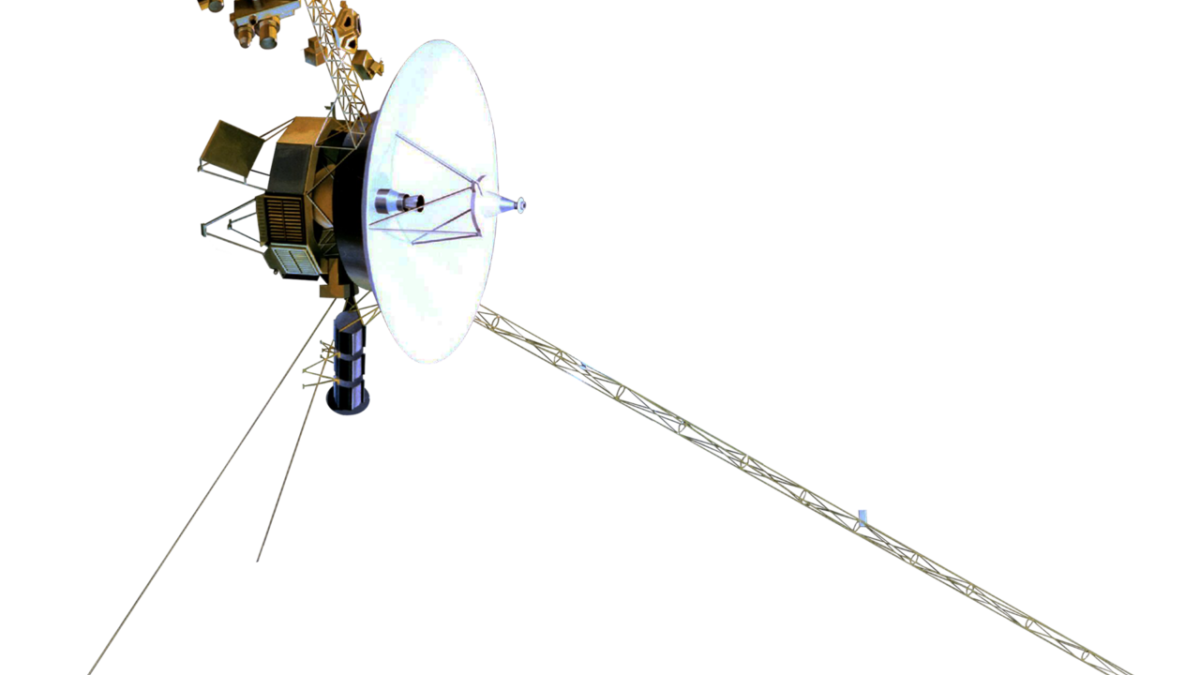
In less than two weeks, a probe launched in 1977 will reach a distance no human-made object has reached before. NASA’s Voyager 1 is set to become the first spacecraft to sit one full light-day from Earth, meaning a radio signal travelling at the speed of light will need 24 hours to make the one-way trip.
When and how far
According to NASA’s calculations, Voyager 1 crosses the threshold on 18 November 2026 (published estimates of the exact hour differ). The agency has cautioned that the exact moment may shift slightly, since both the spacecraft and Earth are moving.
One light-day is about 25.9 billion kilometres, or roughly 173 times the distance between Earth and the Sun. It has taken Voyager 1 a little over 49 years since its launch on 5 September 1977 to get there. As of early October, signals from the spacecraft were taking about 23 hours and 52 minutes to arrive.
Still talking, but running low on power
Voyager 1 left the heliosphere, the bubble of particles and magnetic fields blown out by the Sun, in 2012, becoming the first spacecraft to enter interstellar space. Both Voyager probes are still in contact with Earth, but to save their dwindling power NASA has switched off most of Voyager 1’s instruments one by one, including its cameras. In April 2026 the team turned off its Low-Energy Charged Particle instrument, which could be switched back on later.
Its twin, Voyager 2, is about 3.2 billion km closer to home and is not expected to reach one light-day until November 2035.
Silent ambassadors
Each probe carries a gold-plated record of sounds and images from Earth. Project scientist Linda Spilker has said that once the Voyagers can no longer talk to Earth, those records become humanity’s “silent ambassadors”. The journey ahead is long: NASA notes that Voyager 1 will need around 40,000 years to come closer to another star, AC +79 3888, than it is to the Sun.
Featured image: Image: NASA, Public domain, via Wikimedia Commons.
Sources
Related

Google Quietly Extended Voluntary Buyouts to Staff in Five More Countries as AI Spending Soars

The Elder Scrolls VI Is Called ‘Sentinel’: Bethesda Reveals Title, Confirms Hammerfell Setting